FIELD NOTES / BUYING

Single-stage vs two-stage snow blower

A single-stage blower scoops and throws snow with one auger. A two-stage adds a separate impeller behind it, which is why it costs more, weighs more, and chews through snow a single-stage cannot. For most driveways the single-stage is the right machine; for long rural drives, deep wet snow and plow berms, the two-stage earns its price.

Single-stage vs two-stage snow blower

The short answer

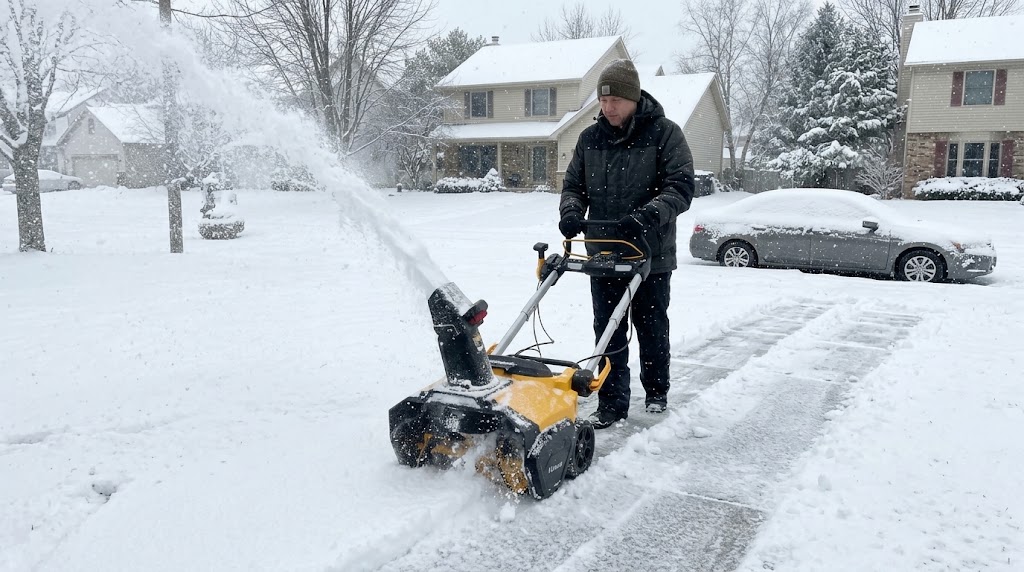
On a paved driveway with typical storms up to about 10 inches, a single-stage blower is enough — and it is lighter, cheaper and easier to store. Both Qrachic machines are single-stage.

Step up to a two-stage when the snow is regularly deeper than the machine can swallow, when the plow leaves a heavy berm at the end of a long drive, when the surface is gravel or uneven, or when the driveway is wide enough that a 24- to 30-inch cut saves real time. Two-stage machines handle those jobs because of the second stage, not because they are bigger.

How the two stages work

In a single-stage machine the auger does both jobs: it scrapes snow off the surface and throws it up the chute in one motion. The auger usually has a rubber or plastic edge, so it can run close to pavement without gouging it. That is why single-stage machines leave a cleaner finish on a paved drive, and why they are the usual choice for walks, decks and steps.

A two-stage machine splits the work. A steel auger gathers snow and feeds it to the centre, and a separate impeller — the second stage — throws it up the discharge chute. The impeller is what gives a two-stage its reach and its appetite: it can move wet, heavy snow and frozen chunks that would stall a single auger. Skid shoes set the housing height, so the steel auger can work over gravel without digging in.

What a two-stage does better

Depth. A two-stage housing is taller and its impeller clears the chute, so machines in this class typically handle 18 to 23 inches in one pass. A single-stage is limited by its housing height — 10 inches on the Qrachic 20-inch blower, 6 inches on the 12-inch shovel.

Wet snow and berms. The impeller keeps heavy snow moving where a single auger bogs down. The packed berm a plow leaves at the end of the drive is the classic case: dense, sometimes icy, and sitting exactly where you have the least room to work.

Surface and width. Steel augers and skid shoes suit gravel and uneven ground, and two-stage machines are commonly 24 to 30 inches wide, which cuts the pass count on a long drive.

The cost is real: 150 to 300 lb, a much higher price, more storage space, and more maintenance — shear pins, belts and, on petrol models, oil and fuel. A two-stage is also harder to manoeuvre on steps and narrow paths, where a light single-stage or a shovel still wins.

What a single-stage does better

It finishes closer to the pavement. The rubber-edged auger can run on the surface, so a single-stage typically leaves less snow behind than a two-stage whose steel auger rides on skid shoes.

It is lighter and simpler. The Qrachic 20-inch blower weighs 41.9 lb without batteries; the 12-inch shovel weighs 14.3 lb. Both start with a button, need no oil or fuel, and store indoors without a petrol smell. There are no shear pins or belts to replace.

It fits the jobs around the drive. Steps, decks, narrow paths between a house and a fence — a compact single-stage goes where a two-stage cannot, and a 12-inch shovel goes where even a 20-inch blower cannot.

None of that helps if the machine is asked to clear more snow than its depth rating. Match the rating to the deepest snow you normally get, not the average.

The two types side by side

Single-stage — one auger does the scooping and throwing; typically 12–22 in wide; up to about 10 in deep; 15–30 ft throw; roughly 40–90 lb; paved drives, walks, decks, steps.

Two-stage — steel auger plus a separate impeller; typically 24–30 in wide; 18–23 in deep; 30–50 ft throw; roughly 150–300 lb; long and wide drives, wet snow, plow berms, gravel.

These are class ranges, not specs for one model. Within either type, clearing width and depth rating still decide how many passes a driveway takes — the arithmetic is in our sizing guide.

Which one fits your driveway

Under 400 sq ft, snow up to about 6 inches: a 12-inch single-stage shovel is enough. Steps and a narrow path may rule out anything wider.

400 to 800 sq ft, up to about 10 inches: a 20-inch single-stage blower handles a two-car drive in roughly 12 passes. This is the common suburban case, and the one the Qrachic 20-inch is built for.

Above 800 sq ft, or regular snow deeper than 10 inches: a wider single-stage takes more passes than you want. Look at a two-stage, or budget for a plow service and keep a smaller machine for the walk.

Any size, if the plow leaves a heavy berm: a single-stage can take a soft berm in bites, but a frozen one is a two-stage job or a pickaxe. If that berm is a weekly event, the second stage is worth the weight.

Where the Qrachic machines fit

Both Qrachic machines are single-stage. The 20-inch cordless blower clears a 20-inch path to 10 inches deep and throws up to 30 ft through a 180° chute, which covers most suburban driveways and a normal storm in one pass. The 12-inch cordless shovel clears 12 inches wide to 6 inches deep, and reaches the steps, decks and narrow paths a full blower cannot.

If your winters regularly bring 18 inches or more, or a rural plow piles a berm you cannot lift, a two-stage machine is the honest recommendation — and it is not something we sell. The sizing guide and the blower-vs-shovel comparison show where the two Qrachic models stop being enough.

Common questions

Is a single-stage blower enough for a two-car driveway?

For most two-car driveways, yes. A 20-inch single-stage clears an 800 sq ft drive in about 12 passes and handles a 10-inch storm in one pass. It slows down in wet snow and needs a second, slower pass on a plow berm — but it finishes the job.

Can a single-stage blower clear a plow berm?

A soft berm, yes, in narrow bites at a slow pace. A frozen or icy berm is beyond a single-stage auger: the machine will ride up and leave the hard core behind. That is the point where a two-stage or a pickaxe is the right tool.

Does a two-stage need more maintenance?

Yes. Two-stage machines add shear pins, belts and a second moving stage; petrol models also need oil, fuel and seasonal storage prep. A cordless single-stage needs charging and a clean housing, which is most of the difference in ownership cost.

Is a two-stage better for a gravel driveway?

Usually. Skid shoes let a two-stage ride above the gravel while the steel auger clears snow, whereas a single-stage rubber auger can pick up stones and throw them. On a paved drive the single-stage leaves the cleaner finish.

Why are cordless two-stage blowers less common?

A two-stage needs more power for its impeller, so the battery pack grows and so does the weight and price. A cordless single-stage like the 20-inch Qrachic already draws 1,300 W and runs about 15 minutes on two 8.0Ah packs; a two-stage would need more capacity for the same session.

Keep reading

What size snow blower do I need?

Width, depth and area arithmetic for any driveway.

Read more

Snow blower vs snow shovel

When a machine is worth owning at all.

Read more

20-inch blower vs 12-inch shovel

The two Qrachic models side by side.

Read more

Compare the snow blowers

Scroll to Top