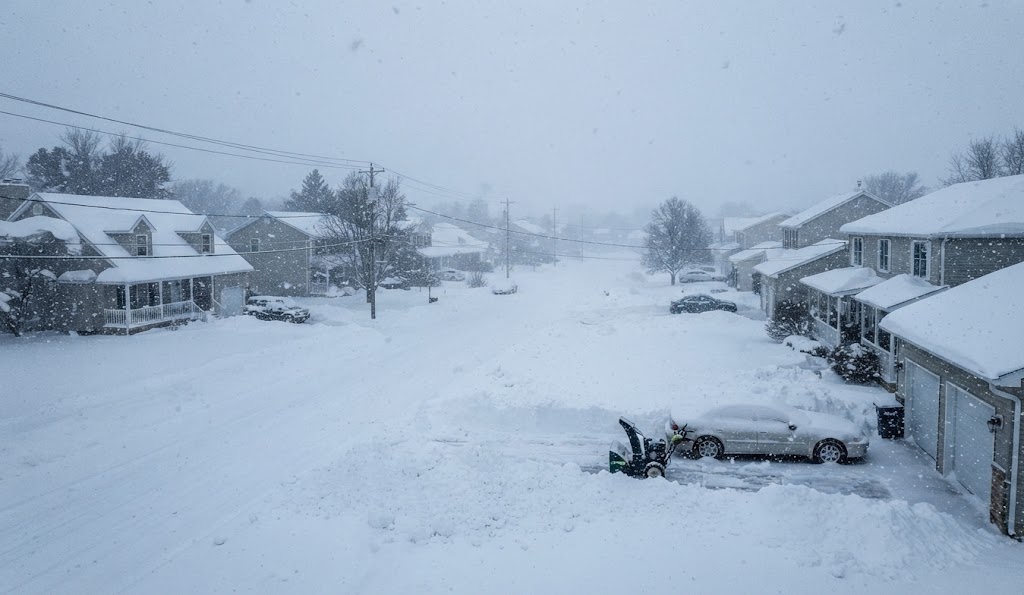
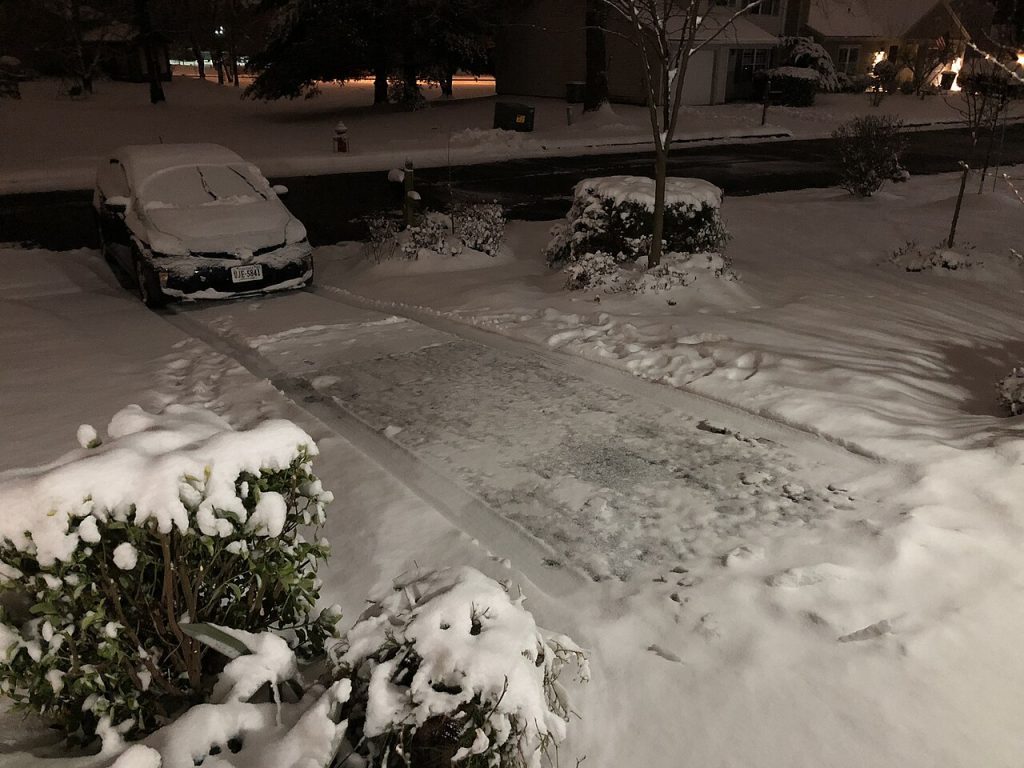
This is the part people photograph. The part they don’t photograph is the four hours after it.
Six inches of snow is an inconvenience. Twelve is a different animal, and not because it’s twice as much. Everything gets worse faster than that — the weight, the water, the hours, all at once.
So here’s the number worth knowing, and it isn’t depth.
A foot of snow weighs less than you think. Then it weighs a lot more.
Water weighs 62.4 pounds per cubic foot. Snow is mostly air, so what matters is how much water got packed into it, and meteorologists express that as a ratio: inches of snow per inch of water. The National Weather Service says the old 10:1 rule of thumb is rough, that roughly 12:1 fits the Upper Midwest better on average, and that individual storms range from about 6:1 to 30:1.
That range isn’t a technicality. It’s a factor of four in the weight of the identical-looking pile outside your door.
Run it on a 1,000 sq ft driveway:
| Snow type | Ratio | Density | 6 in | 12 in | 24 in |
|---|---|---|---|---|---|
| Cold powder | 20:1 | ~3.1 lb/ft³ | 1,560 lb | 3,120 lb | 6,240 lb |
| Typical | 10:1 | ~6.2 lb/ft³ | 3,120 lb | 6,240 lb | 12,480 lb |
| Wet / heavy | 6:1 | ~10.4 lb/ft³ | 5,200 lb | 10,400 lb | 20,800 lb |
| Settled / plowed | — | 15–20 lb/ft³ | 7,500–10,000 lb | 15,000–20,000 lb | 30,000–40,000 lb |
A foot of wet snow on a two-car driveway is around five tons. Eighteen inches pushes it toward eight. And that’s before the plow comes through and shoves a berm of the densest, saltiest, half-frozen snow on the block into the end of your driveway at two in the morning.
One more thing the scientists at NCAR point out: snow compresses under its own weight, so the bottom of a pile can be more than twice as dense as the top. The snow that’s been sitting there three days is not the snow that fell.
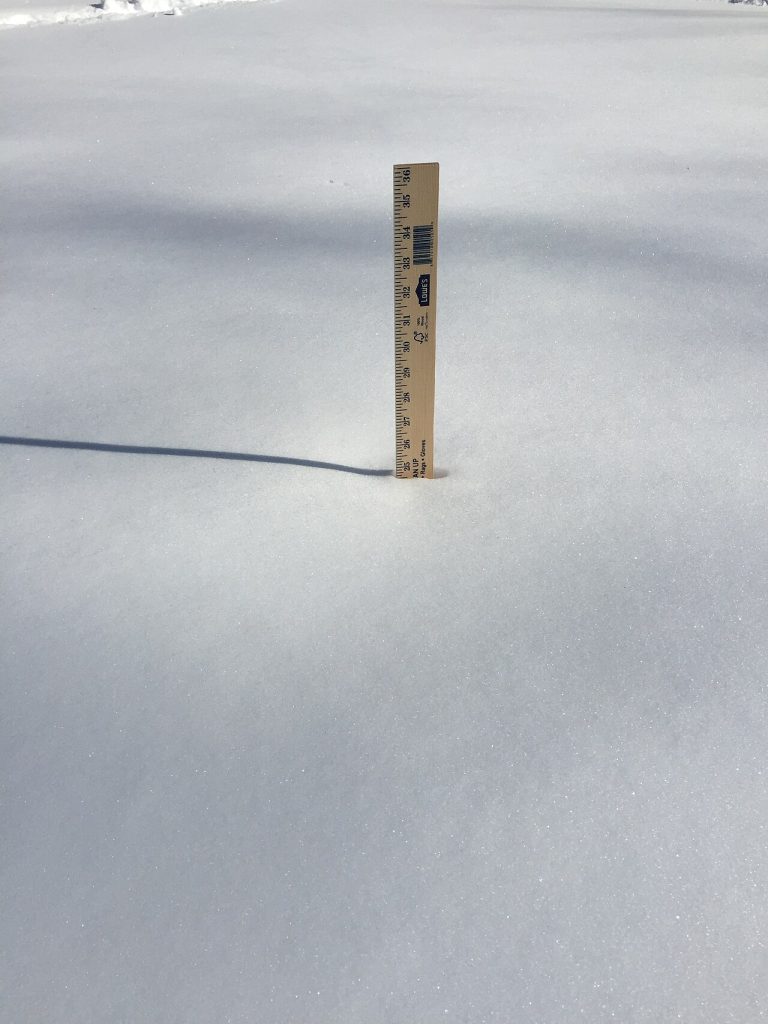
Metric: 6.2 lb/ft³ ≈ 100 kg/m³ · 1,000 ft² ≈ 93 m² · 12 in ≈ 30 cm · 1 US ton ≈ 907 kg.
Your roof is holding the same snow you’re looking at
Every square foot of roof is carrying roughly what the ground next to it is carrying, minus whatever blew off or slid. That’s the part that’s easy to forget, because you never look up.
Roofs aren’t built for infinite load. In the US, building codes (ASCE 7) map a ground snow load for every location, and your roof was engineered for a fraction of it. Across the snow belt those values commonly land somewhere between 20 and 70 psf depending on where you are, which is why “how much snow is too much” has no universal answer. Your local building department will give you your number in about two minutes.
Once you have it, the table above stops being trivia. Twelve inches of typical snow is about 6.2 psf. Three feet of wet snow is about 31 psf — enough to approach or blow past the design load on a roof rated for 30. A 1,500 sq ft roof under a foot of typical snow is carrying roughly 9,400 pounds.
The other failure mode isn’t weight at all. It’s water.
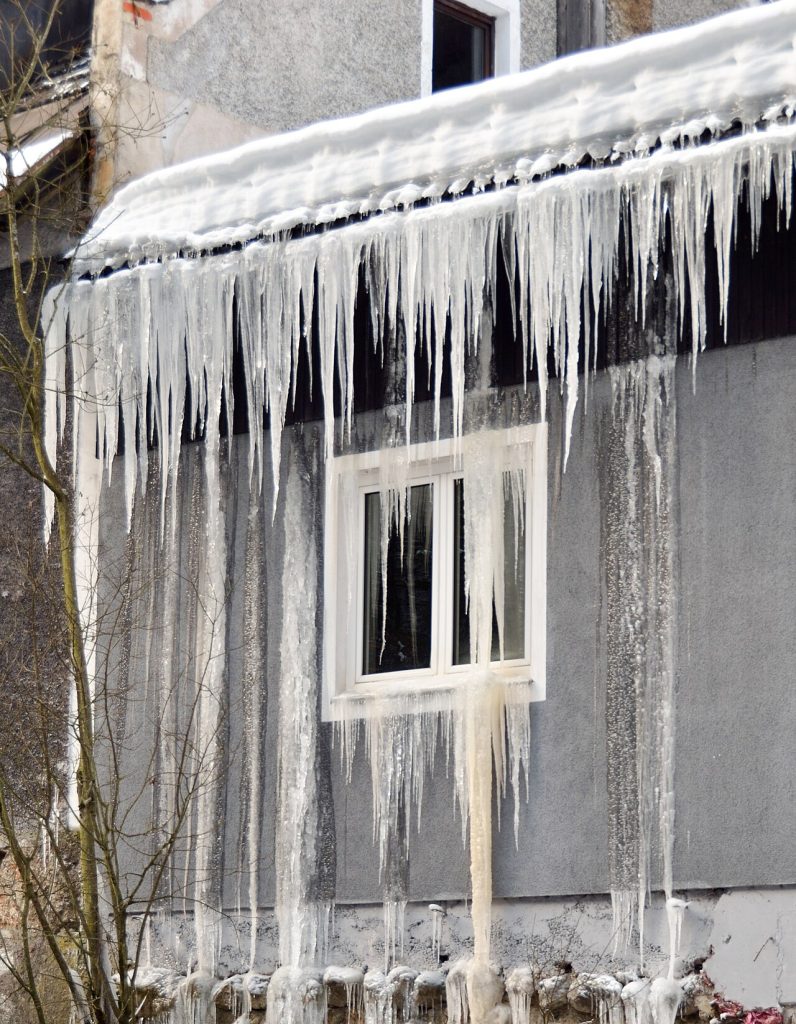
Ice dams form when heat leaking through your attic warms the roof deck, melts the snow sitting on it, and the meltwater refreezes at the cold eave. The ice then backs water up under the shingles and into the house. You usually find out weeks later, when a stain shows up on a ceiling in a room that has nothing to do with the roof.
Signs worth paying attention to: doors that suddenly stick, a new crack above a window, a roofline that looks tired, or creaking you haven’t heard before in that house. Those are phone-call signs, not ladder signs.
If you do clear it, use a roof rake from the ground. Pull snow down; don’t walk up. Never chip ice with an axe — you’ll go through the shingle before you go through the ice, and then you’ve traded a snow problem for a roofing problem. Above the first story, hire someone.
On the driveway, the problem isn’t weight. It’s reps.
Nobody thinks about this before they start, so let’s do it now.
An 18-inch snow shovel cutting four inches deep and carrying a 12-inch scoop moves about half a cubic foot per load. Which means:
| Depth on 1,000 sq ft | Volume | Scoop loads | Hours at 2 scoops/min |
|---|---|---|---|
| 6 in | 500 ft³ | ~1,000 | 8+ |
| 12 in | 1,000 ft³ | ~2,000 | 16+ |
| 18 in | 1,500 ft³ | ~3,000 | 25+ |
Two scoops a minute is a genuinely brisk pace — thirty seconds per scoop including the walk and the throw. Nobody holds it. And wet snow doubles the weight of every single load in that column.
Which is why the honest conclusion isn’t “shoveling takes sixteen hours.” It’s that the arithmetic stops working. Nobody moves 2,000 loads in one go. They do it in three or four sessions across the weekend, in the cold, and then the plow buries the end of the driveway and they start over on the worst part.
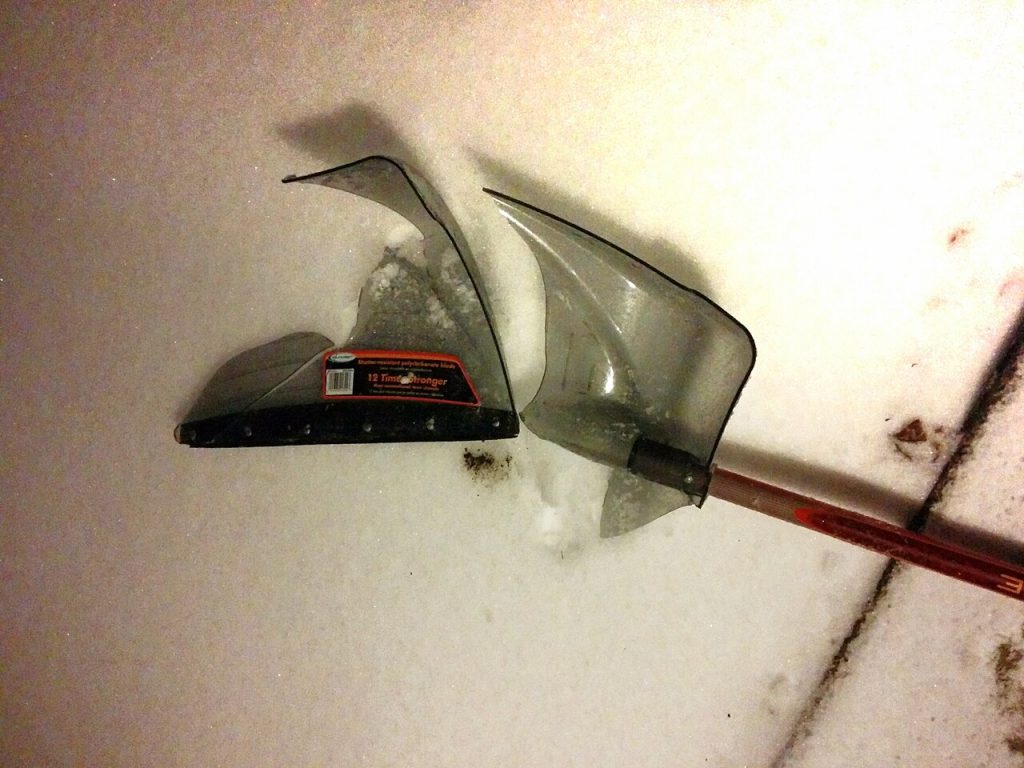
This is where a shovel stops being a tool and turns into a scheduling problem. Every winter somebody’s shovel dies on the same day the storm does, and then it’s a choice between buying whatever the nearest store has left and waiting four days for delivery.
What it does to the person holding the shovel
This is usually where snow articles get vague and say “be careful.” The research is a lot more specific than that.
A 17-year analysis of the National Electronic Injury Surveillance System, published in the American Journal of Emergency Medicine by Watson, Shields and Smith in 2011, put snow-shovel injuries at about 11,500 emergency department visits a year in the US from 1990 to 2006 — 4.15 per 100,000 people. What’s useful is the breakdown:
- 53.9% from acute musculoskeletal exertion. Another 20.0% from slips and falls. 15.0% from getting hit by the shovel itself.
- 34.3% were lower-back injuries. 54.7% were soft-tissue injuries generally.
- 5.8% ended in hospitalization.
- 95.6% happened at or around the home.
- Adults 55 and up made up 21.8% of cases. Kids under 18, 15.3%.
- Cardiac events were 6.7% of cases — and cardiac events accounted for all 1,647 deaths in the study period, roughly 97 a year.
Those deaths are why shoveling has its own cardiology literature. Franklin and colleagues described it in 1997 as a trigger for heart attack and sudden coronary death: upper-body work with the arms held away from the body drives heart rate and blood pressure up, cold air narrows the airways, and most people hold their breath while straining. All of it, first thing in the morning, after eleven months of doing nothing like it.
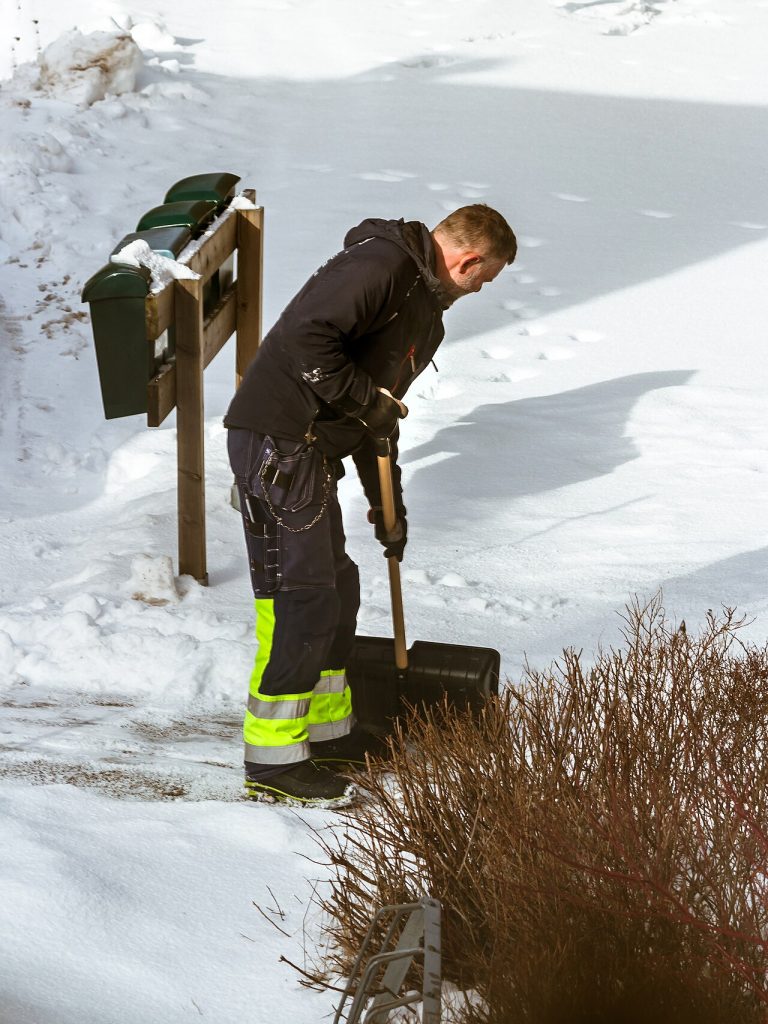
Two honest caveats, because the scary version of these numbers isn’t accurate either. 11,500 visits is about 0.004% of the population, and most of those people are treated and sent home. The same data shows shoveling causes fewer ER visits than sledding does.
The point isn’t that shoveling will kill you. It’s that the injuries are predictable — back, wrists, slips, hearts — and mostly avoidable by pacing yourself, pushing instead of lifting, taking half-size loads, and going out twice instead of once.
If you’re 55-plus, have any cardiac history, or haven’t done hard exercise in a while, treat this as exertion rather than chores. Warm up inside first. Push, don’t lift. Start before the snow gets deep instead of after. And stop immediately if you get chest pain, shortness of breath, or dizziness — call for help instead of sitting down to see if it passes.
And then there’s the house, and the bill
Two failures cause most winter interior damage, and neither looks dramatic while it’s happening.
Frozen pipes. Water expands when it freezes. The pipe splits at its weakest point, doesn’t leak yet, and then floods the place when it thaws — usually while you’re at work. The pipes that fail are almost always on exterior walls, in unheated crawl spaces, or in the garage. Keep the thermostat at 55°F or above even when you’re away, open the cabinet doors under sinks on outside walls, let a faucet drip during cold snaps, and disconnect the hoses before the first hard freeze.
Ice dams, covered above. That one works slowly, over days, and you find out from the ceiling.
Then there’s the sidewalk. Plenty of municipalities require you to clear it within a set number of hours after the snow stops, and a slip-and-fall claim doesn’t care that the snow was “mostly gone.” Look up your city’s rule — the windows vary a lot — and keep some record of when you cleared.
To decide whether a machine is worth it, don’t compare sticker prices. Compare seasons:
| Input | Your number |
|---|---|
| Driveway area (ft²) | |
| Average season snowfall (in) | |
| Plow service quote per visit ($) | |
| Visits you’d actually buy per season | |
| Annual plow cost = visits × quote | |
| Snow blower price, all-in ($) | |
| Break-even seasons = machine price ÷ annual plow cost |
Under about three seasons and the machine is simply cheaper. Over six and a plow service is. The middle is a judgment call about what your Saturdays are worth — which is a real input, not a soft one.
If you do buy a snow blower, read this part
A machine trades a back-and-heart risk for a mechanical one, and the numbers are just as specific.
A 16-year NEISS analysis in Annals of Plastic Surgery (Rubinstein et al., 2019) found an average of 5,800 snow-blower-related upper-extremity injuries a year from 2001 to 2016 — 1.9 per 100,000 people, 92,799 extrapolated over the period. Most-injured body part: the finger. Then the hand. The injuries were fractures, lacerations and amputations.
And the rate went up over those sixteen years, despite safety standards and redesigns. The authors’ conclusion is blunt: existing safety features haven’t reduced upper-extremity injuries, and what’s left is stopping people from putting a hand into the discharge chute while the machine is running.
That’s the whole safety brief, and it’s why every machine ships with a plastic chute-clearing tool:
- Engine off, key out, auger fully stopped before anything goes near the chute. The auger keeps turning after the engine dies.
- Use the tool. Not a hand, not a foot, not a stick you’re holding loosely.
- Eye protection. The machine throws gravel and ice as happily as snow.
- Keep kids and pets behind you and well back, and never let anyone stand at the discharge.
- No loose scarves, drawstrings, or hood cords. They pull people into the auger housing.
A machine that moves five tons of snow in half an hour is worth owning. It’s not worth a finger, and the data says the difference is about ten seconds of judgment when the chute clogs.
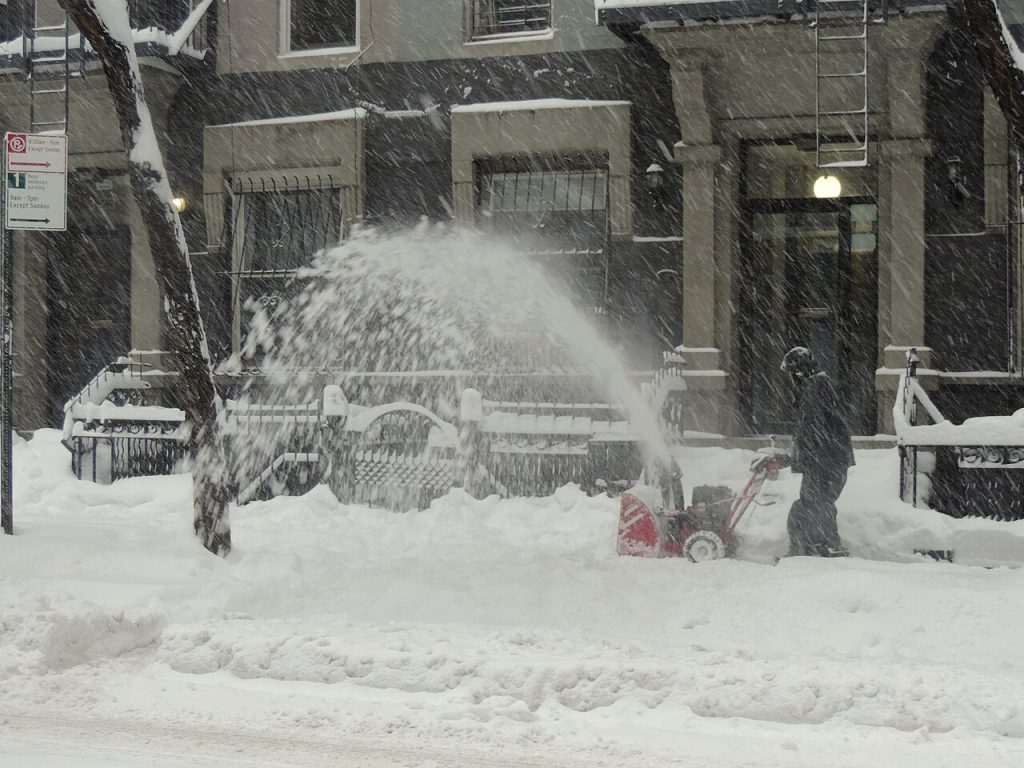
Matching the machine to the driveway
Go by the numbers, not the brochure.
The short version. Under 400 sq ft, a 12-inch shovel covers a walk, a patio or a single-car pad. From 400 to 800 sq ft, a 20-inch single-stage blower clears a two-car driveway in about 12 passes. Above 800 sq ft, or in frequent wet snow and plow berms, a two-stage machine earns its price. The full width, depth and area arithmetic is in What size snow blower do I need?
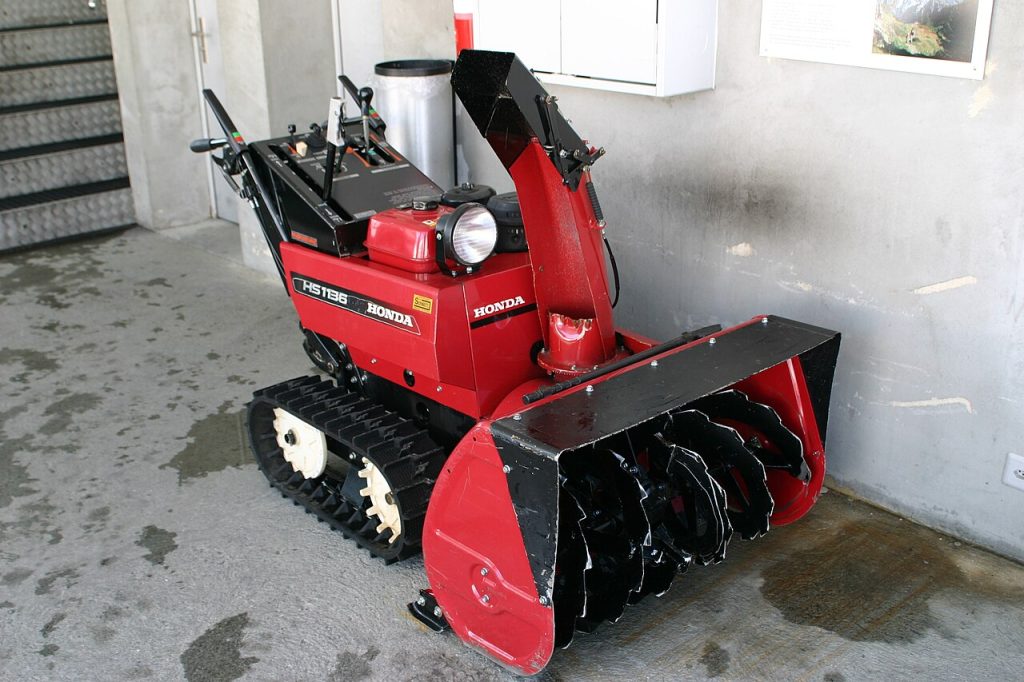
A single-stage clears a narrow path and throws it a short distance — fine for a walkway, unhappy about what the plow leaves behind. A two-stage machine has an impeller that throws snow far enough to clear a wide driveway, and it will eat ice chunks the single-stage just rides over.
Sizing up is cheap. Sizing down means owning the wrong tool in the one week a year you actually need it. Our snow blower guides go deeper on the differences, and the size guide walks through the area-and-snowfall math model by model.
Read the forecast differently now
Once you know about ratios, a snow forecast stops being one number.
6:1, wet and heavy — the one that causes trouble. Plan two passes, go out at four or five inches instead of waiting for the end, and expect the berm in the morning. This is also the snow that overloads roofs.
10:1 to 12:1, typical — the tables above apply as written. One pass at the end of the storm is fine.
20:1 to 30:1, cold and powdery — light enough to push, but it blows straight back in your face. Point the chute downwind and low, and expect to clear the same strip twice if it’s windy.
Why the first six hours matter more than the last six
One thing worth unlearning first: snow does not get heavier while it sits there. The mass that fell is the mass you’re dealing with.
Everything else about it changes, though.
Fresh snow is mostly air. At 10:1 it comes out around 6.2 lb/ft³. Give it a few days of settling, one sunny afternoon and one clear cold night, and the same pile measures 15 to 20 lb/ft³. The NCAR researchers measured the bottom of a snowpack at more than twice the density of the top. Same weight, roughly half the volume — and every scoop now weighs two to three times what it did on the morning it fell.
Then it welds itself down. Fresh snow scrapes clean off asphalt. Snow that has been through a melt and a refreeze comes up in slabs, and the bottom inch is ice at 57 lb/ft³, three times the density of what you were pushing around at eight in the morning.
And then there’s the berm. Clear before the plow comes and you’re clearing snow. Wait, and you’re clearing snow plus whatever the plow packed into the end of your driveway — already compressed, already salted, already half frozen.
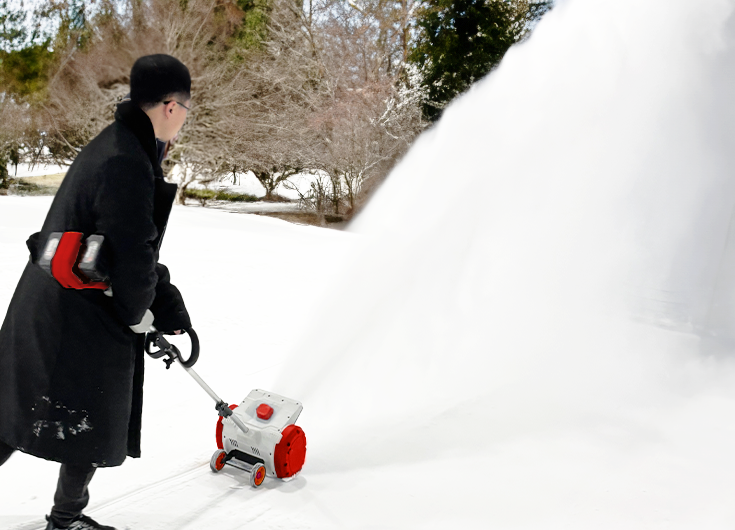
There’s a mechanical version of the same argument. At four inches, a machine throws snow far enough to put it where you actually want it — up over the bank, into the yard, away from the mailbox. At fifteen inches plus a berm it’s working at its limit, and the snow goes wherever it happens to reach, which is usually back onto the part you just cleared.
So the rule is: go out when half to two-thirds of the forecast has landed. Not at the first flake, and not when it’s over.
Two forty-minute sessions beat one four-hour one — and the injury numbers earlier in this article are really about fatigue. Backs go when form goes.
The two machines we sell, and who each one is for
We sell both of these, so read the recommendation with the obvious grain of salt. What follows is which driveway each one suits, including the ones where it doesn’t.
If you have a real driveway and real winters
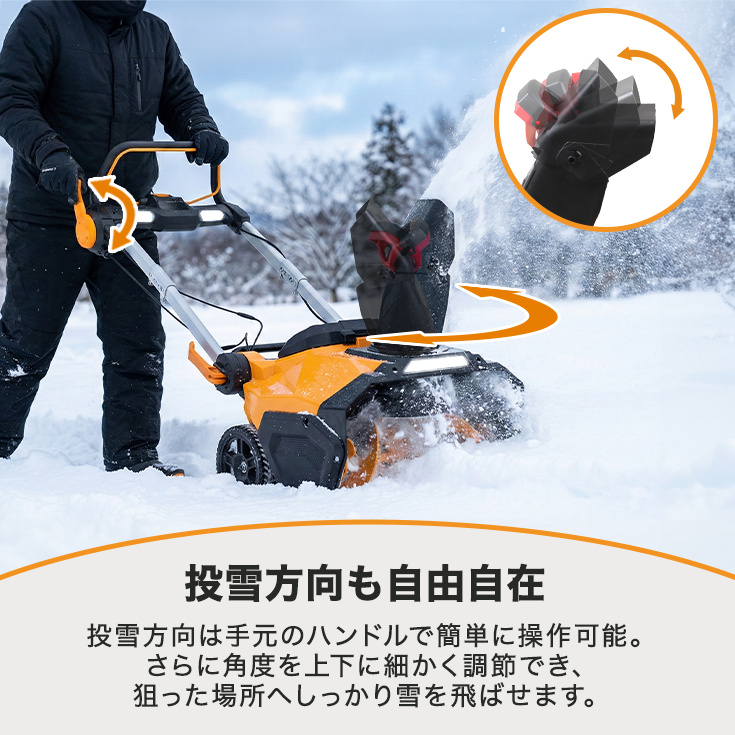
It’s rated for 1.5 to 9 m (5 to 30 ft) of throw, with chute direction and angle controlled from the handle. In practice that means you can put snow over a bank without walking back and forth, and clear a berm without eating it in two bites.
This is the machine for the 800–1,500 ft² driveway in the table above, for 12 inches and up, and for the morning after the plow.
It’s the wrong purchase if you have a 300 ft² city lot and a shovel finishes the job in fifteen minutes. It’s heavier, and it’s more machine than that driveway needs.
If you have walkways, steps, a deck, or a small driveway
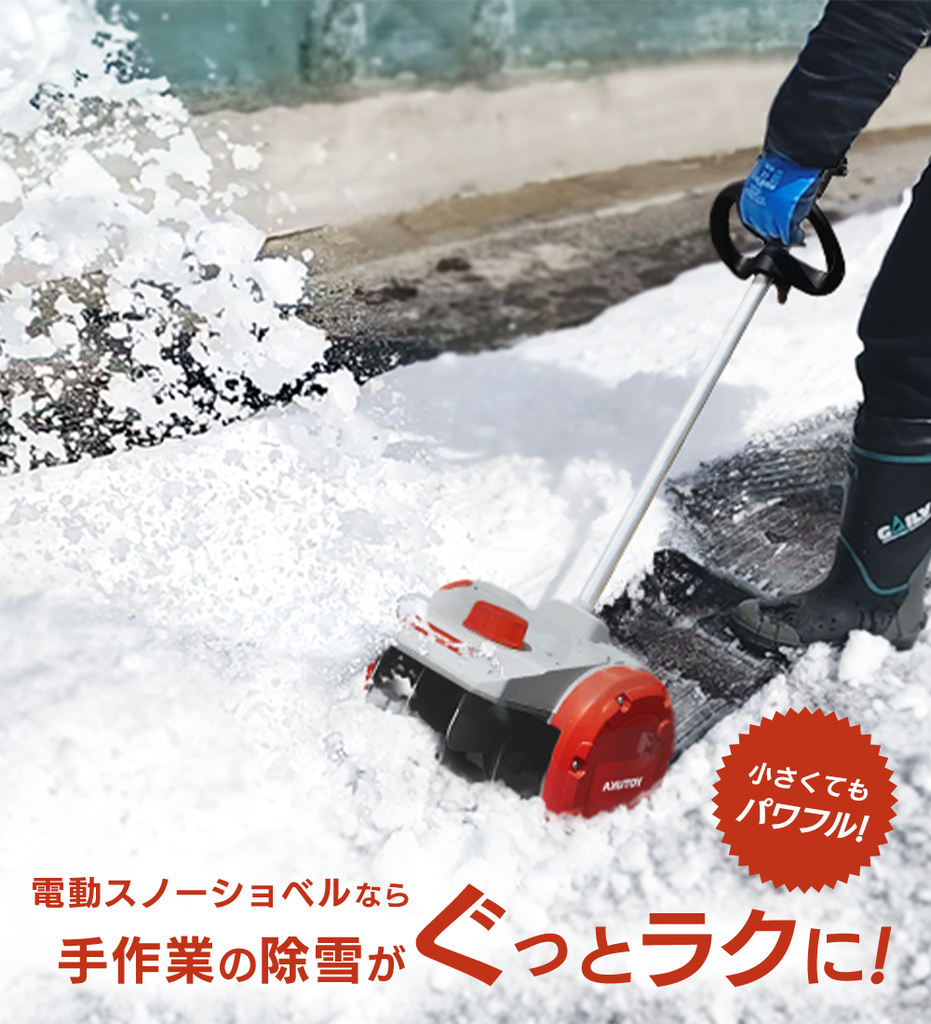
This is the tool for a 400 ft² driveway, the front walk, the steps and the deck. No gas, no pull cord, no winter storage ritual — and it scrapes up the slush the plow leaves at the end of the walk instead of skating over it.
What it isn’t: an 18-inch storm machine. Against a two-foot fall with a frozen berm you’ll be working it hard and wishing you’d bought the other one.
→ QS-STE1320-2 specs and current price
Still not sure? The size guide walks through the area-and-snowfall math, and the full snow blower range is here.